After returning to Dublin, I decided, I was gonna go see buildings and attractions of cultural and historical significations which I have not yet seen.
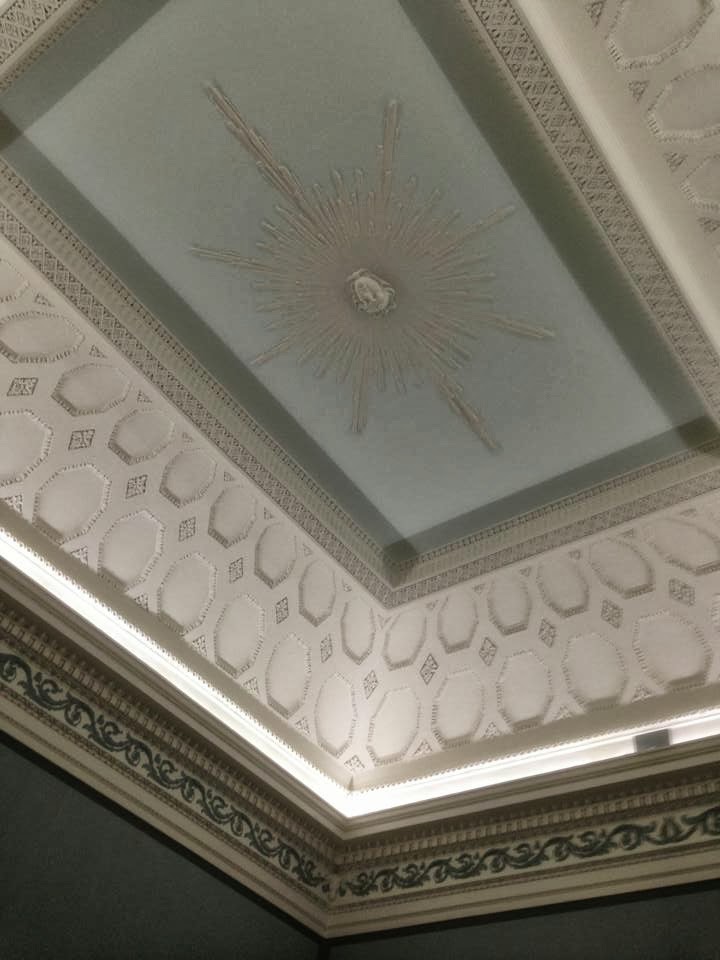
So first on the agenda, was visit something near to my new place, the Rathfarnham Castle, which was a short cycle away, lucky I timed it where I missed the bad rain. Rathfarnham Castle is a 16th Century castle, which is a national monument which is currently undergoing extensive refurbishment by the office of public works. The castle also houses the Berkeley Costume and Toy Collection which is a collection of 18th and 19th toys, dolls and costumes. In the latter part of the 18th century, the castle was remodelled on splendid scale due in part to finest architects of the time, Sir William Chambers and James Stuart. My visit occurred on a wet Tuesday afternoon, the admission is free and is a self guided tour of the castle, with a OPW member of staff available to answer any questions. Average duration between 40-60 mins. The 10 rooms of interested within the castle, with in particular magnificent ornate plaster work and ceilings in the gilt and four season rooms. Also adjacent to these rooms is the main ballroom which through superb restoration work by the OPW, the chandeliers look amazing. In each of the rooms, you get to see 18th/19th items from Berkeley collection relevant to that room such as the ballroom which highlights Evening and Reid day dresses. On the exterior of the building, you observe its four flanker towers which is an example of a fortified house. After my tour of the castle, made the very short walk to the Stuart and Chambers Tearooms which are located in the old castle kitchens. To combat the bad weather decided to treat my self to coffee and cake, I just couldn't resist. Will have to make a return visit.
I was not letting the rain ruin another day off of mine, so after getting all the essential jobs taken care of, hopped on the bus and decided to visit the 12th century remains of the St. Audeon church which to this day, is a practicing parish church and only remaining medieval one in Dublin situated in the heart of the walled medieval city. The church is located around the corner from the world famous Christ Church Cathedral. The church built in 1190 was built on the site of an older church dedicated to St. Colmcille. Towards the end of the 20th century OPW carried out extensive restoration work in particular to the St Anne's Chapel re-roofing it as the visitor centre. Admission is free and average duration is 30-40 mins.
So after an early start and 2 buses later, managed to make it to the Casino at Marino, which is one of the finest Neoclassical Buildings in Europe. The tour began 20 mins roughly after I arrived, after Deirdre, the tour guide, pointed out few illusions and architectural trickery. Funny enough the tour commenced with just me, but more people were brought to join us. After a background history of the miniature garden temple masterpiece which was designed by the famous Sir William Chambers. The Word Casino itself actually means 'small house', surprisingly enough this building contains 16 finely decorated rooms, which the interior decorated with ornate plasterwork and patterned marquetry floors. A walk around the outside of the building reveals tricks created by Sir Chambers and Lord Charlemont. On top of the temple are statues of Ceres, Bacchus, Apollo and Venus and has 4 lions at each corner of the temple as to guard a sacred place. Our tour guide, Deirdre was so friendly, informative and showed that she had such a passion for her job, that I didn't realise I'd been on the tour for almost 2 hours. How the tour guide compared the building to a TARDIS, made me chuckle and glad to be a Whovian. She meant by that the building is bigger in the inside than the outside.


I decided to continue my culture day, so went to Dublin Castle and the State Apartments, which was also free as part of the Free Wednesday been run by the OPW. I luckily enough to arrive just in time for the next tour at 2 pm. The tour takes in several very important historical and ceremonial rooms such as the James Connolly room where memorial plaques of the military commander of the 1916 rebellion, who while lying injured in bed in this room, was court martialled and sentenced to death. Throne room also known as the Presence Chamber, was where visiting sovereigns received the homage of loyal subjects and Viceroys were ceremonially inaugurated and held their farewell receptions. The most important ceremonial room in Ireland is St. Patrick's Hall, which is the focal point of important State functions including the inaugurations of Irish Presidents. The tour of castle which became more modelled on a palace than a fortress after the great fire of 1684, showcased superb 18th century French blue glass and brown and Italian Venetian glass chandeliers, 20th Waterford Crystal chandeliers and the ceiling paintings in particular in St. Patrick's Hall which depict St. Patrick lightning the paschal fire on the Hill of Slane 433, King George III seated between Britannia and Hibernia and King Henry II receiving submission of the Irish Chieftains in 1171. After the tour of the castle, we crossed the courtyard, passing the 'impartial' Lady of Justice before entering the Undercroft which features the subterranean chamber of the tenth century Viking town defensive bank. Although this tour of Dublin Castle, wasn't my first visit, I also doubt it will be my last, as enjoyable and seeped in history as ever.


On my recommendation, Niamh made use of the Open House weekend, first going to visit Casino at Marino which she agreed with my statement quite TARDIS like, bigger in the inside. She couldn't believe it was only used as a pleasure palace and found the tunnels fascinating. After her surreal visit of the building, she hopped on the bus, to her next stop was the Trinity School of Nursing and Midwifery, the former Bord Gáis Showrooms. It was interesting to see how they amalgamated Art Deco style and Neo-Tudor, in combination with Egyptian touches such as the sarcophagus window and doors. The electric inferior of the building is stark contrast to the dense urban block.


Continuing on her jam packed day, next up was the Chocolate Factory on King's Inn Street, which was the former home of Williams and Woods, who produced chocolate, sweets, canned goods, soaps and jams within this building. The company is currently owned by Néstle, where production is still in the same factory in Tallaght, after Williams and Woods moved there. The old building is currently being used by a non profit creative community known as the Chocolate Factory. An interesting antidote, the National Archives were housed within this building from the 1950's until they abandoned it and the majority of the archives in the early 2000's. It took the new owners over a year to clean and sort everything post archives.

The following morning, Niamh still full of beans, continued her Open House excursions, starting with Rathfarnham Castle and Tearooms. As she was a tad unfamiliar with the area, I cycled to meet her at the castle after work. So while she waited, she had a relaxing read by the pond filled with ducks and the odd Labrador, Lola. I must say, the castle and its surroundings is more worthwhile when the weather is favourable. After this excursion, we made the trek, as described by Niamh via Google Maps, to Pearse Museum and St. Edna's Park. The building is situated within a well maintained grounds and courtyard. The building itself is actually in quite good condition and had some interesting features such as the boys bedrooms and Halla Mór. Recently added is various art works by Willie and James Pearse, Patrick Touhy and Jack B Yeats, this art gallery is still under construction. Although at present, this exhibition is temporary, the plan is to make it permanent.


Tuesday, as both Niamh and me were off, we decided to go mad and have a full on culture day beginning with the Collins Barracks Museum near Heuston. I meet Niamh at Museum Luas stop. As we climbed the stairs towards the museum, we turned around and saw a beautiful view of the Croppies Acre, which is a memorial to the Croppy Boys of the 1798 rebellion. It is traditionally believed that the men of this rebellion were buried ere after their execution.

The barracks itself is the headquarters of the national museum of Ireland and houses Decorative Arts and Military History. The barracks is home to several different exhibition, with some highlights in particular being the 1916 exhibition which examines the decade of disturbance between 1913 and 1923, from the Dublin Lockout, through the Easter Rising to the end of the Civil War. Other areas over 8 galleries on permanent exhibition display Ireland's military history from 1550 into the 21st Century and broken down into three themes, the Soldiers & Chiefs exhibition looks at Irish soldiers at home, aboard and in the 21st Century. Another particular highlight is the Irish Silver Collection which is one of the largest in the world traces the development of the silversmith's craft from early 17th Century to present day.


On route out of the barracks, we noticed the new permanent exhibition of Asgard, which through a major conservation programme is now on exhibition in the barracks and tells the story of its construction and the pivotal role the yacht played in the 1914 Howth gun running and later its use as Ireland's first national sail-training vessel. The yacht is intertwined with many of Ireland's historical events that shaped the course of Irish history and also ties in with the 1916 exhibition and Soldiers and Chiefs exhibitions.

From Collins Barracks, we walked the short stroll toward Arbour Hill Cemetery which is a military cemetery and is the last resting place of 14 of the executed leaders of the insurrection of 1916 including Patrick Pearse and James Connolly. Their bodies were transported from Kilmainham Gaol were they were executed and buried in Arbour Hill. The graves are located in what was once the old prison yard under a low mound of Wicklow granite. The gravesite is surrounded by a limestone wall which has the names inscribed in both Irish and English. We exited the cemetery through a doorway besides the memorial which gives access to the Irish United Nations Veterans Association house and memorial garden. Both Collins Barracks and Arbour Hill are free and as in the past, always worth a revisit.

After exiting the memorial garden, we walked the 20 or so minute walk to St. Mary's Abbey on Meetinghouse Lane, off Capel Street. This Cistercian Abbey is closed due to budget cuts, however lucky enough, we were able to arrange a private tour through the OPW. The admission was free, and the foreman that looks after sites such as this, Tommy was quite funny and so helpful. The abbey today only two rooms remain, the Chapter House and the Slype. The Abbey was founded in 1139 and played a pivotal role in state affairs until its dissolution by Henry VIII in 1539. It was in the Chapter House that "Silken" Thomas Fitzgerald started his unsuccessful rebellion in 1534 and it is in this context that the Abbey is mentioned by James Joyce in the "Wandering Rocks" chapter of Ulysses.

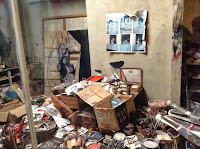
From our visit to the Abbey, we made our way towards Hugh Lane gallery and Garden of Remembrance. On route Niamh showed me where the old Chocolate Factory building was located. Hugh Lane gallery is located in Parnell Square and located in Charlemont House, originally the town house of James Caulfield, the 1st Earl of Charlemont and was designed by the famous Sir Williams Chambers. The admission to the gallery is free and funded by the Dublin City council and was founded by Hugh Lane and is the first known public gallery of modern art in the world. The gallery has a permanent collection and hosts exhibitions, mostly by contemporary Irish artists. Francis Bacon's studio was reconstructed in the gallery. The current exhibition is Dublin Divided: September 1913, marking the centenary of the Dublin Lockout of 1913 and admission is free.

On exiting the gallery, we finished our crazy full day of culture off with a visit to the Garden of Remembrance, which is located directly across from the gallery. The gardens are dedicated to the memory of all who gave their lives in the cause of Irish Freedom. The sculpture is based on theme of the "Children of Lir". The garden is intended as a place of quiet remembrance and reflection and of course admission is free.

On my Saturday off, I decided to head to Dublin Zoo with my mate Michéal. Dublin Zoo was established in 1831 by the Royal Zoological Society and is the third oldest zoological gardens in the world. The Zoo is located in Phoenix Park over 28 hectares and houses 400 animals. You walk around the zoo with peacocks, herons and swans, roaming freely. The zoo itself is divided into themed areas including Africa Savanna, World of Primates, Asian Forests, The Kaziranga Forest Trail, Fringes of the Arctic, South American House, Reptiles, Family Farm and Endangered Species. Dublin Zoo is home to one of the most famous lion in the world, Leo the Lion, the mascot of Metro Goldwyn Meyer movies. Born at the zoo in 1919, was originally named Cairbre then renamed Slats and was used on all the black-and-white MGM films between 1924-1928. With so much to see and do around the zoo, before we knew it, we had spent in excess of 3 hours walking around, enjoying ourselves. Always enjoy a visit here, already planning a trip back with
+Niamh this time.
.jpg)


Despite the damp weather, Niamh and me continued on with our tour of Dublin museums, with today's tour commencing with the National Library which is free admission. On route to the library we came upon a protest by old aged pensioners outside the Dáil. The library has a permanent exhibition celebrating the life and work of W B Yeats in the main building and a current temporary exhibition in 2/3 Kildare street to commemorate The Dublin Lockout 1913. After our literature trip to the library, we made the short stroll to the National Museum of Ireland - Archaeology. On display over seven galleries are artefacts from 7000 BC. The exhibitions trace the development of Irish civilisation from the arrival of the first people in Mesolithic to Late Medieval Ireland. Separate exhibitions to these are ones introducing ancient civilisations of Cyprus, Egypt and Rome. The museum like all national museums is free admission.
From the museum, we walked towards the Merrion Square and the Natural History museum which is free admission also known as the Dead Zoo, which provides a cabinet-style museum showcasing a wide ranging zoological collection. The museum itself houses approx 10,000 exhibits. The ground floor is the Irish Room dedicated to animals native to Ireland. The giant Irish deer skeletons found at the entrance of the museum are some of the most famous and distinctive on display with one of the skeletons having an antler span of 3.5 m. On the Upper floor is the mammals of the world collection.
After our visit to the Dead Zoo, we walked through Merrion Square park on route to the National Gallery. While in the park, we came upon the memorial which commemorates the soldiers who lost there lives in service to the state. We finished our day of museums at the National Gallery which is free admission and is currently undergoing refurbishment.


One of the historic building which has eluded us for so long, but we finally managed to visit is Farmleigh house. I had stayed with Niamh, the night before, so we got the bus towards the Castleknock Gate of Phoenix Park. We got a private tour of the house, just the two of us. Our guide gave us a history of the house and its architecture. Farmleigh is an estate of 78 acres purchased from the Guinness family by the state. The house has been carefully refurbished by the OPW as the premier accommodation for visiting dignitaries and guests of the nation, the last been, we were informed been the Canadian Prime Minster, Stephen Harper in the lead up to the G8 summit in June. Originally a small Georgian house built in the late 18th Century, purchased by Edward Cecil Guinness on his marriage in 1873. A great-grandson of Arthur Guinness, Edward Cecil became the first Earl of Iveagh in 1919. The first major building programme was in 1881-84, which extended the House to the west, refurbished the existing house and added a third storey. In 1896, the Ballroom wing was added. With the addition of a new Conservatory adjoining the Ballroom in 1901. By the early years of the 20th century, all the requisites for gracious living and stylish entertainment. Its charm lies in the eclecticism of its interior decoration ranging from the classical style to Jacobean, Louis XV, Louis XVI and Georgian. Two particular highlights were the Dining Room and Library, both, just totally spectacular. After our private free tour of the house, we went exploring the rest of the estate. Viewing the boathouse, the clock tower, walled garden and dairy. We got lucky with the weather for the most part, and both agreed will have to revisit this outstanding superb building again soon.


 Our first stop off the bus was at Christchurch Crypt, a part of Dublin so charming in days of auld that it was referred to as Hell. So while we were in Hell, to the rather startled bemusement of some in the tour, our guide demonstrated using tools and gestures, the practice of body-snatching, whether it was of full bodies for sale to the medical community or merely the removal of teeth and hair from the corpses. While in the crypt, we were told about a prisoner of the name Dr Olocher and he was imprisoned, due to be hanged, for the murder and rape of 35 women. But he was never hanged. In fact, he took his own life within the jail, but that was only where and when the trouble started. When one of the guards was found bloody and unconscious at his post, he came to and told everyone that he was attacked by a monstrous black dog. Soon after, tales of the black dog spread through the taverns and soon these tales escalated after the phantom dog struck again. Therefore the myth of the werewolf began. After hopping back on the bus, we made our way towards St Patricks Cathedral. It's here where we heard the story behind the Lady in White, who it's said still stalks her cruel husband at the Cathedral's graveyard. We jump off at our last port of call, St Kevin's Park formerly St. Kevin's Cemetery where members of Thomas Moore family, the poet, are buried. The ivy-laded church ruins in the centre of the park, apparently houses the ghost of Bishop Dermot O'Hurley executed in Penal Times. High season for bishopric apparitions is said to be July and his feast day been June 20th, the day he was executed. The Bishop was beatified 1992 by Pope John Paul II. After our last hop back on the bus, we exited the bus and tour in Temple Bar. Niamh and Me, both agreed, the tour was great fun, creepy, dark and well worth doing.

.JPG)


.JPG)




.jpg)


.JPG)


